
Water-Based vs Air-Based Pumps: What’s the Real Difference?
I Tested Both. The Mechanism Feels Different Immediately.
The first time I used a traditional air pump, the pressure felt sharp and localized.
The first time I used a water-based pump, the pressure felt smoother and more evenly distributed.
The difference isn’t marketing. It’s physics.
Before choosing any device, you need to understand how each mechanism works. Most buyers don’t. They just compare prices.
That’s a mistake.
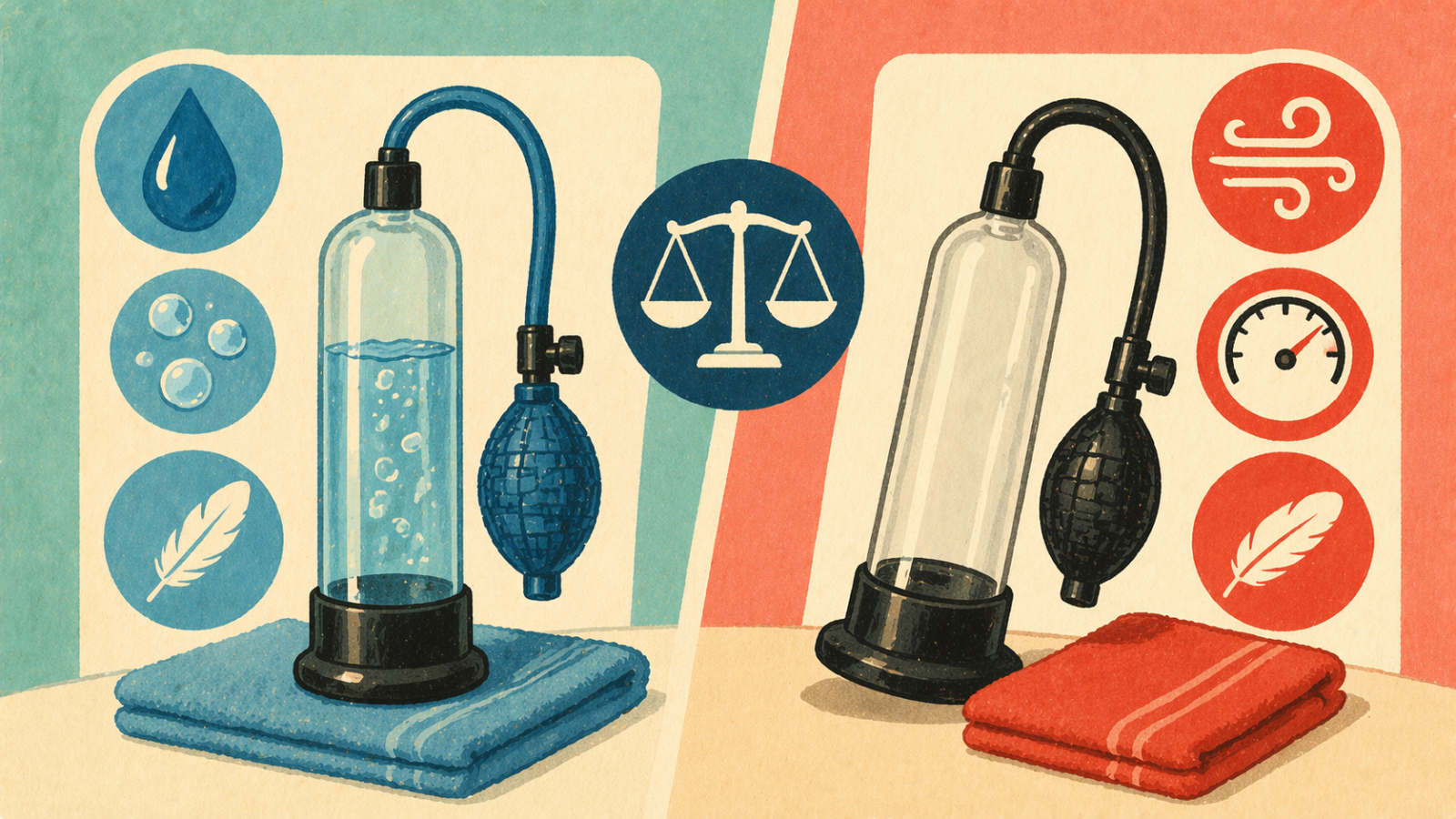
Side-by-Side Comparison
| Feature | Water-Based Pumps | Air-Based Pumps |
|---|---|---|
| Pressure Medium | Warm water (hydro-pressure) | Air (vacuum suction) |
| Typical Use Location | Shower or bath | Anywhere (dry use) |
| Pressure Distribution | Even, enveloping | Variable, depends on technique |
| Setup Time | Requires filling with warm water | Ready to use immediately |
| Portability | Limited by water requirement | Highly portable |
| Lubrication | Usually not required | Water-based lubricant recommended |
| Comfort for Beginners | Generally higher | May require practice |
| Pressure Precision | Moderate (valve-based control) | High (gauge-equipped models available) |
| Cleanup | Rinse with water | Wipe down; clean lubricant residue |
| Price Range | Mid to premium | Budget to premium |
How Air-Based Pumps Work
Air pumps create vacuum pressure by removing air from a sealed cylinder.
The process:
- Place cylinder over the area.
- Manually or mechanically remove air.
- Internal vacuum pulls tissue outward.
Because air compresses unevenly, pressure distribution can become concentrated in specific zones.
If pressure increases too quickly:
- Discomfort rises fast.
- Pressure spikes become noticeable.
- Seal instability becomes common.
Air systems rely heavily on manual control precision.
Experienced users can manage this. Beginners often overpump.
How Water-Based (Hydro) Pumps Work
Water-based systems use hydrostatic pressure.
The process:
- Fill cylinder with water.
- Insert device while submerged or during shower use.
- Create vacuum using water displacement.
Water does not compress the way air does.
Pressure spreads more evenly across surface area.
The result:
- Smoother suction sensation.
- Reduced localized pressure spikes.
- More stable seal when sized correctly.
Hydro systems still require manual control. They are not automatic safety devices.
But the mechanical behavior differs.
Pressure Distribution: The Key Mechanical Difference
Air pressure:
- Compressible medium
- Can create uneven tension
- Sensitive to small seal leaks
Water pressure:
- Non-compressible medium
- More uniform distribution
- Often feels more controlled
That distribution difference changes user experience significantly.
It does not make one “magical.” It makes them mechanically distinct.
Seal Stability Comparison
Seal stability determines session quality.
Air pump:
- Seal depends entirely on suction strength.
- Small air leaks reduce effectiveness quickly.
Hydro pump:
- Water creates additional natural seal assistance.
- Proper girth match increases stability.
Sizing still matters in both systems.
If sizing is wrong, neither system performs properly.
For sizing guidance, read:
How to Choose the Right Bathmate Size
Comfort Differences in Real Use
Air pumps often feel more intense early in sessions.
Hydro pumps typically feel more gradual.
That gradual pressure makes hydro systems appealing to beginners who want smoother sensation.
Comfort does not replace discipline.
Aggressive pressure in either system increases risk.
Safety Implications: Control Beats Mechanism
Both systems rely on negative pressure.
Both can cause problems if misused.
The difference lies in how pressure behaves under stress.
Air systems can increase suction rapidly if the pump is over-engaged. That rapid pressure shift can surprise beginners.
Hydro systems tend to feel more progressive because water distributes force more evenly. That progression often makes it easier to moderate intensity.
Neither system removes responsibility from the user.
Pressure discipline determines safety.
If you have not reviewed safe usage principles, read:
Is Bathmate Safe? Official Guidelines
Which System Suits Which User?
Here’s a practical breakdown.
Air Pump May Suit You If:
- You want a dry system.
- You prefer quick setup without water.
- You are experienced with pressure control.
Hydro Pump May Suit You If:
- You prefer smoother pressure distribution.
- You value comfort during longer sessions.
- You want more forgiving pressure progression.
Hydro systems often appeal to first-time users because the sensation feels more controlled.
Air systems may appeal to experienced users who prefer simplicity and faster setup.
Choice should match usage style, not marketing language.
Maintenance Differences
Air Pumps:
- Wipe down after use.
- Minimal water cleanup.
- Fewer moisture concerns.
Hydro Pumps:
- Require access to water.
- Need drying after sessions.
- Slightly more setup and cleanup time.
Hydro use is more practical in shower environments.
Air use can be more convenient in dry settings.
Maintenance preference can influence consistency.
Consistency influences outcomes.
Cost Comparison
Air pumps vary widely in price depending on brand and build quality.
Hydro systems like Bathmate typically sit in structured tiers:
- Hydro7: $99
- HydroMax: from $139.99
- HydroXtreme: $259.99
Hydro models often justify pricing through:
- Water-based pressure design
- Comfort pad refinements
- Sealing upgrades
Price alone does not determine effectiveness.
Mechanics, fit, and discipline matter more.
You can compare current live pricing directly here:
Long-Term Usage Considerations
Air systems can be effective long-term when used responsibly.
Hydro systems may feel more sustainable for users who prioritize comfort and seal stability.
If discomfort discourages consistency, progress slows.
If setup friction discourages sessions, consistency drops.
Choose the system you will actually use regularly.
The Real Mechanical Takeaway
Air-based pumps and water-based pumps operate on the same vacuum principle.
The difference lies in medium behavior:
Air compresses.
Water distributes.
That difference changes feel, stability, and control.
It does not eliminate the need for:
- Proper sizing
- Controlled pressure
- Consistent routine
If you are deciding between specific Bathmate models after understanding hydro mechanics, read:
HydroXtreme vs HydroMax Comparison
Can I switch between water-based and air-based pumps?
Yes, many users incorporate both types into their routine for different contexts. Just ensure you adjust technique appropriately for each medium.
Do water-based pumps work better for erection quality?
Both types can support erection quality when used correctly. Water-based pumps may feel more comfortable for beginners due to even pressure distribution, but air-based pumps offer precise control that experienced users may prefer.
Is one type safer than the other?
Safety depends more on proper use than pump type. Follow guidelines for pressure, duration, and hygiene regardless of which medium you choose. Water-based pumps may reduce friction-related irritation for some users.
Can I use lubricant with a water-based pump?
Typically not required, as water provides the sealing medium. If you choose to use lubricant, ensure it is water-based and compatible with the device materials. Check your model’s instructions.
How do I clean each type?
Water-based pumps: rinse thoroughly with lukewarm water and mild soap; air-dry completely. Air-based pumps: wipe cylinder with damp cloth, clean lubricant residue with mild soap, ensure all parts are dry before storage.
Which type is better for travel?
Air-based pumps are generally more portable since they do not require a water source. Compact designs and travel cases are common in this category.